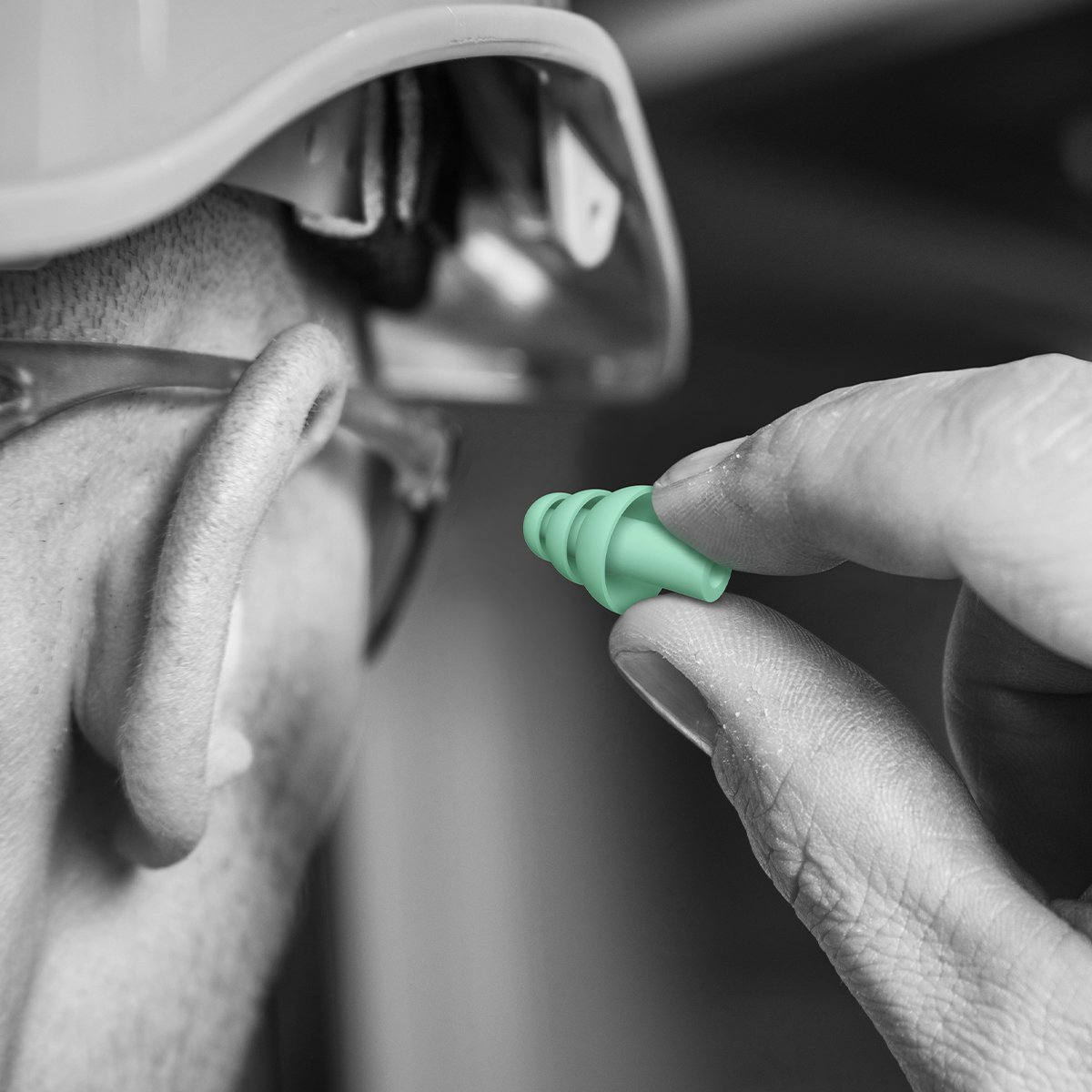
Earplugs fall out at work most often because of a poor fit — either the size is wrong for your ear canal, or they were not inserted correctly in the first place. Foam earplugs are especially prone to this because they compress and expand unpredictably, and standard silicone options rarely account for the natural variation in ear canal shape and size. The sections below break down each cause and what you can actually do about it.
Why don’t earplugs stay in some ears?
Earplugs do not stay in some ears because ear canals vary significantly in size, shape, and angle from person to person. A plug designed around an average ear canal will not create a reliable seal in ears that are narrower, wider, or angled differently. Without that seal, the earplug has nothing to grip and will gradually work its way out during normal movement.
There are a few common reasons this happens more in some people than others:
- Narrow ear canals: Standard earplugs are sized for an average canal. If yours is on the smaller side, the plug sits loosely and cannot anchor itself properly.
- Irregular canal shape: Some ear canals curve sharply or taper at an unusual angle, which prevents a round earplug from sitting flush against the walls.
- Jaw movement: Talking, chewing, or even turning your head shifts the tissue around the ear canal, which can break the seal and push the plug outward over time.
- Sweat and moisture: In a work environment where you are physically active, sweat reduces friction and makes it harder for any earplug to stay seated.
None of this means your ears are unusual. It simply means the earplug you are using may not be the right match for your anatomy or your working conditions.
Does earplug size and type affect how well they stay in?
Yes, earplug size and type have a direct impact on fit and retention. Foam earplugs are a one-size-fits-all product that relies on expansion pressure to stay in place. They work reasonably well in average-sized ear canals but tend to over-expand in narrow canals and under-expand in wider ones. Silicone earplugs are more flexible but still come in limited size ranges. For earplugs that fit all ear sizes reliably, the material and construction of the earplug matter as much as the size label on the packaging.
Here is how the main types compare in a work setting:
- Foam disposables: Cheap and widely available, but inconsistent fit and prone to falling out once the foam loses its resilience after a few uses.
- Standard silicone: Softer and more comfortable than foam, but still limited in how well they conform to irregular canal shapes.
- Synthetic rubber (high-density): Denser and more flexible than silicone, which allows the earplug to conform more closely to the canal walls and maintain a secure seal throughout a full shift.
- Custom-molded: The most precise fit possible, but expensive and not practical for most workers.
If you have been struggling with fit across multiple brands, switching earplug type is often more effective than trying a different size within the same product category.
How do you insert earplugs so they actually stay in?
The correct insertion technique makes a bigger difference than most people realize. For most reusable earplugs, the method is straightforward: reach over your head with your opposite hand, gently pull the top of your ear upward and back to straighten the canal, then insert the earplug with a slow, gentle rotating motion until it sits snugly without feeling painful. This straightening step is the part most people skip, and it is the reason the earplug never seats properly.
Follow these steps for a reliable fit every time:
- Clean and dry your hands before handling the earplugs.
- Reach across your head with the opposite hand and pull the top of your ear gently upward and backward.
- Insert the earplug slowly with a slight twisting motion, allowing it to follow the natural angle of your canal.
- Release your ear and hold the earplug in place for a few seconds while it settles.
- Check the fit by covering your ears with your palms. If sounds become noticeably more muffled, the seal is good.
For foam earplugs, you also need to roll them down to a thin cylinder before insertion and hold them in place for 20 to 30 seconds while they expand. Skipping this step is the single most common reason foam plugs fall out within minutes.
Can wearing a helmet or safety gear push earplugs out?
Yes, helmets and safety gear can absolutely push earplugs out or break their seal. Hard hats, face shields, and ear defenders all create pressure around the head and ear area. When you put on or remove this gear, the movement around your ear canal shifts the earplug position. Over a long shift where you are repeatedly taking your hard hat on and off, even a well-inserted earplug can gradually work its way out.
The same issue applies to safety glasses with thick temples, which press against the outer ear and can transfer pressure inward. Workers in construction and manufacturing often deal with this constantly because their protective gear is layered and constantly being adjusted.
A few practical ways to reduce this problem:
- Recheck and reseat your earplugs after putting on or removing any headgear.
- Choose earplugs with a low-profile stem that sits flush with the outer ear, reducing the chance of contact with gear.
- Avoid earplugs with large external handles or flanges that catch on helmet liners or hat brims.
- If you use over-ear hearing protection alongside earplugs, make sure the combination is compatible and not creating competing pressure points.
When should you replace your earplugs instead of adjusting them?
You should replace your earplugs when the material has degraded to the point where it no longer holds its shape or creates a reliable seal. For foam earplugs, that can happen after just a handful of uses. For silicone, degradation is slower but still happens. Signs that replacement is overdue include visible cracking or discoloration, a sticky or stiff texture, and a noticeable drop in how well the plug blocks sound even when inserted correctly.
If you find yourself constantly readjusting your earplugs throughout the day and the problem persists even after improving your insertion technique, the earplug itself is likely the issue rather than your technique. Worn-out material cannot maintain the pressure needed for a good seal, no matter how carefully you insert it.
For workers who wear hearing protection every day, durability is worth paying attention to. Replacing disposable foam plugs daily adds up quickly in both cost and waste. A high-quality reusable earplug made from dense synthetic rubber holds its shape and seal significantly longer. Our Shush Worker earplugs are built for exactly this kind of daily use, with a durable synthetic rubber construction rated for at least 365 days of reuse and an SNR of 23 dB to protect against the hazardous noise levels common in manufacturing and construction. The internal ceramic filter design keeps sound clear and natural so you can still hear colleagues without removing them, which means you are far less likely to take them out during your shift and far more likely to actually keep them in.
Frequently Asked Questions
What's the best way to tell if my earplugs are actually creating a proper seal?
The quickest test is to cup both palms firmly over your ears while the earplugs are inserted — if sounds become significantly more muffled, the seal is solid. You can also hum quietly to yourself; a well-sealed earplug will make your own voice sound fuller and more resonant inside your head. If neither of those checks out, reseat the earplugs using the ear-pull technique before assuming the product itself is the problem.
Are there earplugs specifically designed for people with narrow or unusually shaped ear canals?
Yes — synthetic rubber and high-density flexible earplugs are your best starting point because they conform more closely to irregular canal shapes than foam or standard silicone ever will. Some manufacturers also offer multi-size packs or tapered designs that work better in narrower canals. If you have tried multiple product types and still can't get a reliable fit, it may be worth consulting an audiologist who can assess your canal geometry and recommend a solution.
How do I keep earplugs in place during physically demanding work where I'm sweating a lot?
Sweat is one of the biggest culprits for earplug slippage in active work environments, so material choice matters a lot here. Dense synthetic rubber tends to hold its grip better than foam or smooth silicone when moisture is present because its surface texture maintains friction against the canal walls. Wiping the outer ear dry before reinserting earplugs during breaks and avoiding over-handling them with sweaty hands will also help maintain a consistent seal throughout the shift.
Is it safe to use earplugs and over-ear earmuffs at the same time, and will that make the earplugs fall out more?
Dual protection — earplugs worn underneath earmuffs — is actually a recognized practice in extremely high-noise environments like heavy manufacturing or demolition sites. The key is to insert the earplugs first and get a solid seal before placing the earmuffs on, rather than the other way around. Choose low-profile earplugs without large external stems or flanges so the earmuff cushions sit flat and don't create pressure that dislodges the plug during the shift.
Can I reuse foam earplugs to save money, or is it always better to go with a reusable option?
Foam earplugs are technically reusable for a few days, but their performance drops off quickly — the foam loses resilience after just a handful of uses and can no longer expand enough to maintain a proper seal. For daily use over a full work year, a high-quality reusable earplug made from durable synthetic rubber is almost always the more cost-effective and reliable choice. The upfront cost is higher, but you eliminate the ongoing expense and waste of replacing disposables every day or two.
What's the biggest mistake workers make when it comes to hearing protection on the job?
The most common mistake is removing earplugs during the workday because they are uncomfortable or interfering with communication — even brief unprotected exposure to hazardous noise levels can contribute to cumulative hearing damage over time. Choosing an earplug with an acoustic filter that allows speech and environmental sounds to pass through clearly makes it far easier to keep them in all day without feeling isolated. Comfort and communication-friendliness are just as important as the noise reduction rating when you are wearing hearing protection for an entire shift.
How do I know if my workplace noise level actually requires hearing protection, and what SNR or NRR rating do I need?
In the United States, OSHA requires hearing protection when noise exposure reaches or exceeds 90 dB as an 8-hour time-weighted average, with a recommended action level of 85 dB. Common industrial environments like construction sites, manufacturing floors, and warehouses routinely exceed these thresholds. When selecting an earplug, look for a Noise Reduction Rating (NRR) that, when applied using OSHA's derating formula, brings your effective exposure below 85 dB — and always cross-reference the product's rating with the actual measured noise levels in your specific work area.