Long-term noise exposure at work causes real, lasting health damage — and hearing loss is just the beginning. Workers in loud environments face a range of physical and psychological effects, from permanent hearing damage and tinnitus to increased stress, fatigue, and reduced quality of life. The damage builds gradually, which is exactly what makes it so easy to underestimate. Below, we break down the most important questions about how noise affects worker health and what you can do about it.
What types of health damage does workplace noise cause?
Workplace noise causes several types of health damage beyond hearing loss. The most direct effect is noise-induced hearing loss (NIHL), a permanent reduction in hearing ability caused by repeated exposure to loud sound. But prolonged noise exposure also raises stress hormone levels, elevates blood pressure, disrupts sleep, reduces concentration, and contributes to cardiovascular strain over time.
The physical mechanism is straightforward: loud noise damages the tiny hair cells inside the cochlea that convert sound into nerve signals. Once those cells are gone, they do not regenerate. But the body’s stress response to constant loud noise compounds the damage. Elevated cortisol and adrenaline from chronic noise exposure put sustained pressure on the cardiovascular system, which is why long-term noise exposure has been linked to higher rates of hypertension and heart disease in occupational health research.
Mental health is also affected. Workers in persistently loud environments report higher levels of anxiety, irritability, and difficulty sleeping even after their shifts end. Fatigue accumulates faster when the brain is constantly working to filter out noise, leaving workers more depleted at the end of the day.
How loud does noise need to be to damage your hearing?
Hearing damage begins at sustained exposure above 85 decibels (dB). The Occupational Safety and Health Administration (OSHA) sets the permissible exposure limit at 90 dB for an 8-hour workday, with required hearing conservation programs starting at an 8-hour time-weighted average of 85 dB. The louder the noise, the less time it takes to cause damage.
The relationship between volume and safe exposure time is not linear. At 85 dB, a full 8-hour shift sits at the edge of safety. At 91 dB, that safe window drops to around 2 hours. At 100 dB, it shrinks to under 15 minutes. This is why brief but intense noise events, like using a jackhammer or operating heavy machinery, carry serious risk even when they feel short.
A useful reference point: normal conversation sits around 60 dB, a busy city street around 80 dB, and a running chainsaw or industrial drill typically exceeds 100 dB. Many manufacturing floors, construction sites, and transportation hubs regularly push past the 85 dB threshold throughout the entire workday.
How does noise-induced hearing loss develop over time?
Noise-induced hearing loss develops gradually through repeated exposure to damaging sound levels. In the early stages, workers often notice a temporary threshold shift, where sounds seem muffled or distant after a loud shift. With rest, hearing appears to recover. But over months and years, the damage accumulates until the loss becomes permanent and no longer reverses.
One of the most deceptive aspects of NIHL is that it typically starts in the high-frequency range around 4,000 Hz, which affects the clarity of speech and high-pitched sounds before affecting overall volume perception. Workers often do not notice a problem until the damage is significant, because low-frequency hearing remains intact and conversations still seem audible, just less clear.
By the time most workers seek a hearing test, years of preventable damage have already occurred. This is why occupational audiologists consistently emphasize that protection needs to start before symptoms appear, not after.
What are the long-term effects of tinnitus from noise exposure?
Tinnitus from noise exposure is a persistent ringing, buzzing, or hissing sound in the ears that has no external source. When caused by occupational noise, it is often permanent. Long-term tinnitus significantly affects sleep quality, concentration, emotional well-being, and overall quality of life, and it frequently accompanies noise-induced hearing loss rather than occurring on its own.
The psychological burden of chronic tinnitus is substantial. Constant internal sound makes it harder to fall asleep, follow conversations, and maintain focus during tasks that require sustained attention. Over time, this contributes to elevated anxiety, depression, and social withdrawal. Workers with tinnitus often report that the condition affects their relationships and mental health as much as their hearing itself.
There is currently no cure for noise-induced tinnitus. Management strategies include sound therapy, cognitive behavioral therapy, and hearing aids in cases where hearing loss also exists, but none of these eliminate the sound. Prevention is the only reliable path to avoiding it.
Which jobs and industries carry the highest noise exposure risk?
The industries with the highest noise exposure risk include construction, manufacturing, mining, agriculture, transportation, and military service. Workers in these sectors regularly face sustained noise levels above 85 dB throughout their shifts, putting them at serious risk of hearing damage without consistent hearing protection.
Within those broad categories, specific roles carry particularly high risk:
- Construction workers operating drills, jackhammers, and heavy equipment
- Factory and assembly line workers near industrial machinery and conveyor systems
- Miners exposed to drilling, blasting, and ventilation equipment
- Airport ground crew working near jet engines
- Farmers operating tractors, harvesters, and other agricultural machinery
- Transportation workers including truck drivers, train operators, and bus drivers
- Musicians and sound engineers in professional audio environments
Even roles that seem less obviously loud, like carpentry, plumbing, or working in a busy warehouse, can produce cumulative noise exposure that crosses the damage threshold over a full shift. The risk is not always dramatic or obvious, which is part of why hearing damage in these fields remains widespread.
How can workers protect themselves from noise-related health damage?
Workers can protect themselves from noise-related health damage by combining engineering controls, behavioral changes, and consistent use of hearing protection. The most effective approach is to reduce noise at the source where possible, limit time spent near loud equipment, and wear properly rated hearing protection whenever noise levels exceed 85 dB.
Practical steps workers can take include:
- Know your environment. Understand the noise levels in your workplace and which tasks or zones exceed safe thresholds.
- Use hearing protection consistently. Protection only works when it is worn. Removing earplugs for even short periods during loud tasks significantly reduces their effectiveness.
- Choose the right protection. Different environments require different levels of attenuation. Look for earplugs with an appropriate SNR or NRR rating for your specific noise level.
- Take noise breaks. When possible, step away from loud machinery to give your ears recovery time during the workday.
- Get regular hearing checks. Annual audiometric testing catches early signs of damage before they progress to permanent loss.
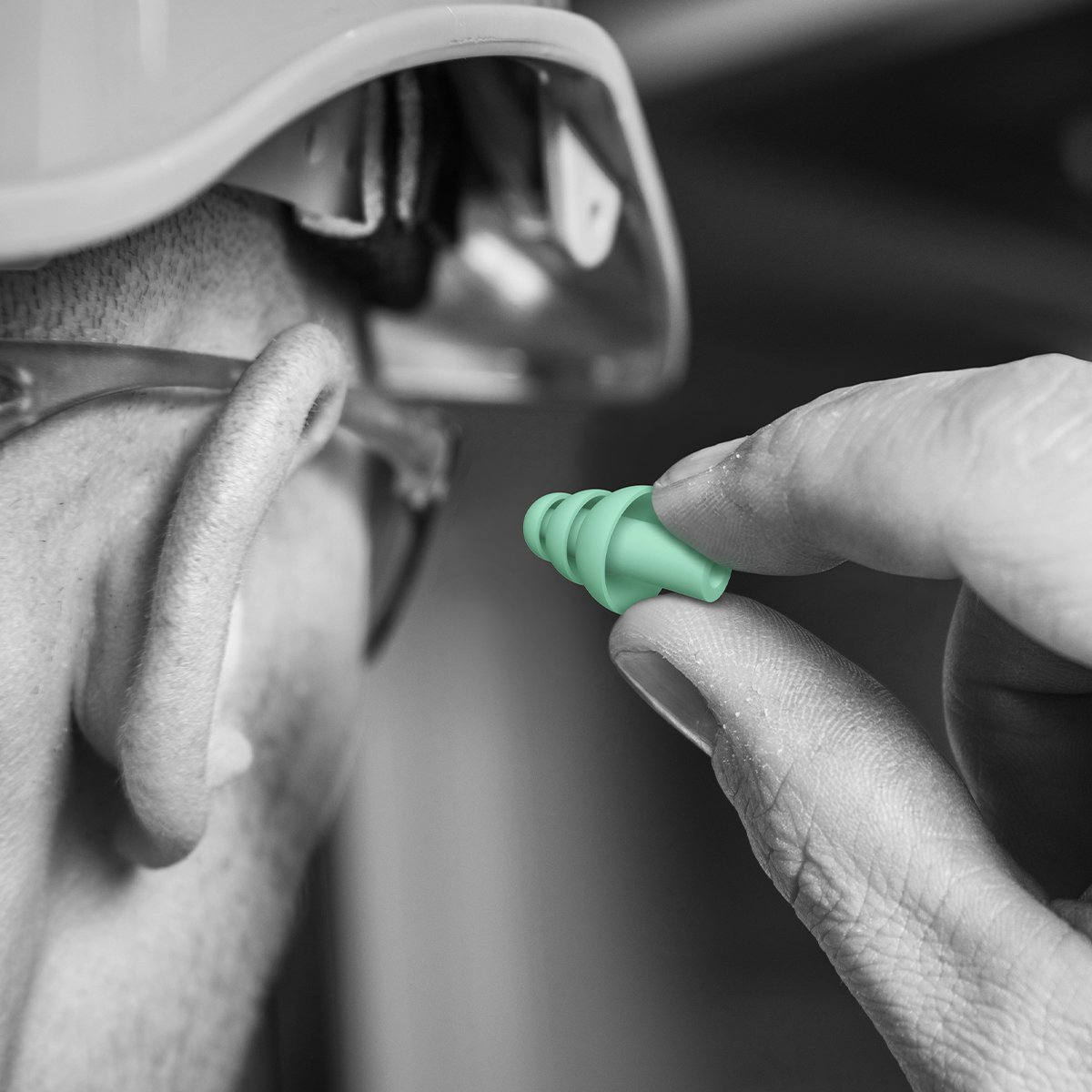
Choosing hearing protection that you will actually wear consistently makes a real difference. Many workers avoid standard foam or silicone earplugs because they muffle communication and feel uncomfortable over a full shift. That is why we designed the Shush Worker earplugs specifically for occupational use. With an SNR of 23 dB, they reduce hazardous industrial noise to safe levels while preserving clear, natural sound so you can still communicate with colleagues without pulling them out. Made from durable, hypoallergenic synthetic rubber, they hold up to daily use and stay comfortable across a full workday. Because the best hearing protection is the kind you actually keep in.
Frequently Asked Questions
How do I know if my hearing protection is actually providing enough coverage for my specific workplace?
Check the Noise Reduction Rating (NRR) or Single Number Rating (SNR) on your hearing protection and compare it to the measured decibel levels in your work environment. As a general rule, if your workplace averages 100 dB, you need protection rated high enough to bring your effective exposure below 85 dB. If you're unsure of your workplace's exact noise levels, ask your employer for the most recent noise assessment results — OSHA requires employers to conduct noise monitoring when exposure may meet or exceed 85 dB as an 8-hour time-weighted average.
Can hearing loss from workplace noise be reversed or treated once it starts?
Unfortunately, noise-induced hearing loss (NIHL) is permanent once the hair cells in the cochlea are destroyed — there is currently no medical treatment that restores them. Hearing aids can help amplify sound and improve communication, but they do not restore natural hearing. This is why early and consistent prevention is so critical: the damage that has already occurred cannot be undone, but further progression can be stopped by removing or reducing exposure going forward.
What should I do if my employer isn't providing adequate hearing protection or noise monitoring?
You have legal rights under OSHA's Hearing Conservation Standard (29 CFR 1910.95), which requires employers to implement a hearing conservation program when noise exposure reaches or exceeds 85 dB as an 8-hour time-weighted average. If your employer is not meeting these requirements, you can file a confidential complaint directly with OSHA at osha.gov or by calling 1-800-321-OSHA. You can also request that your employer conduct a noise assessment — workers are entitled to observe monitoring and access the results.
Are there any early warning signs that noise is already damaging my hearing?
Yes — some of the earliest warning signs include a temporary muffled or "plugged" feeling after a loud shift, difficulty understanding speech in noisy environments, needing to turn up the TV or phone volume more than you used to, and a ringing or buzzing sound in your ears after work. These symptoms, especially temporary threshold shifts that seem to resolve overnight, are your body's signal that cumulative damage is occurring. Don't wait for symptoms to become permanent before seeking an audiometric evaluation.
How often should I get my hearing tested if I work in a noisy environment?
OSHA requires employers to provide annual audiometric testing for workers enrolled in a hearing conservation program — meaning anyone regularly exposed at or above 85 dB over an 8-hour shift. You should also establish a baseline audiogram when you start a new job in a noisy environment so that any future changes can be accurately tracked. If you notice any changes in your hearing between scheduled tests, don't wait for the annual exam — schedule an evaluation with an audiologist as soon as possible.
Does wearing hearing protection affect my ability to hear important workplace sounds like warnings, alarms, or coworker communication?
This is one of the most common reasons workers resist using hearing protection consistently, and it's a legitimate concern — but the right protection addresses it. Standard high-attenuation earplugs can over-muffle sound in moderate-noise environments, making communication harder. However, hearing protectors designed with flat or "natural" attenuation profiles reduce harmful noise levels while preserving speech clarity and the ability to hear alarms. If standard foam earplugs are interfering with your ability to communicate safely, talk to your employer about alternative options better suited to your specific noise environment.
Can stress and fatigue from workplace noise cause long-term health problems beyond the ears?
Yes — the health effects of chronic occupational noise exposure extend well beyond hearing. Research published in occupational health literature has linked long-term noise exposure to elevated rates of hypertension, cardiovascular disease, and metabolic disorders, largely driven by the body's sustained stress response to constant loud sound. Chronic noise-related fatigue also compounds over time, contributing to reduced immune function, poorer sleep quality, and increased risk of workplace accidents due to impaired concentration. Treating noise as a whole-body health hazard — not just a hearing issue — is essential for long-term worker wellbeing.