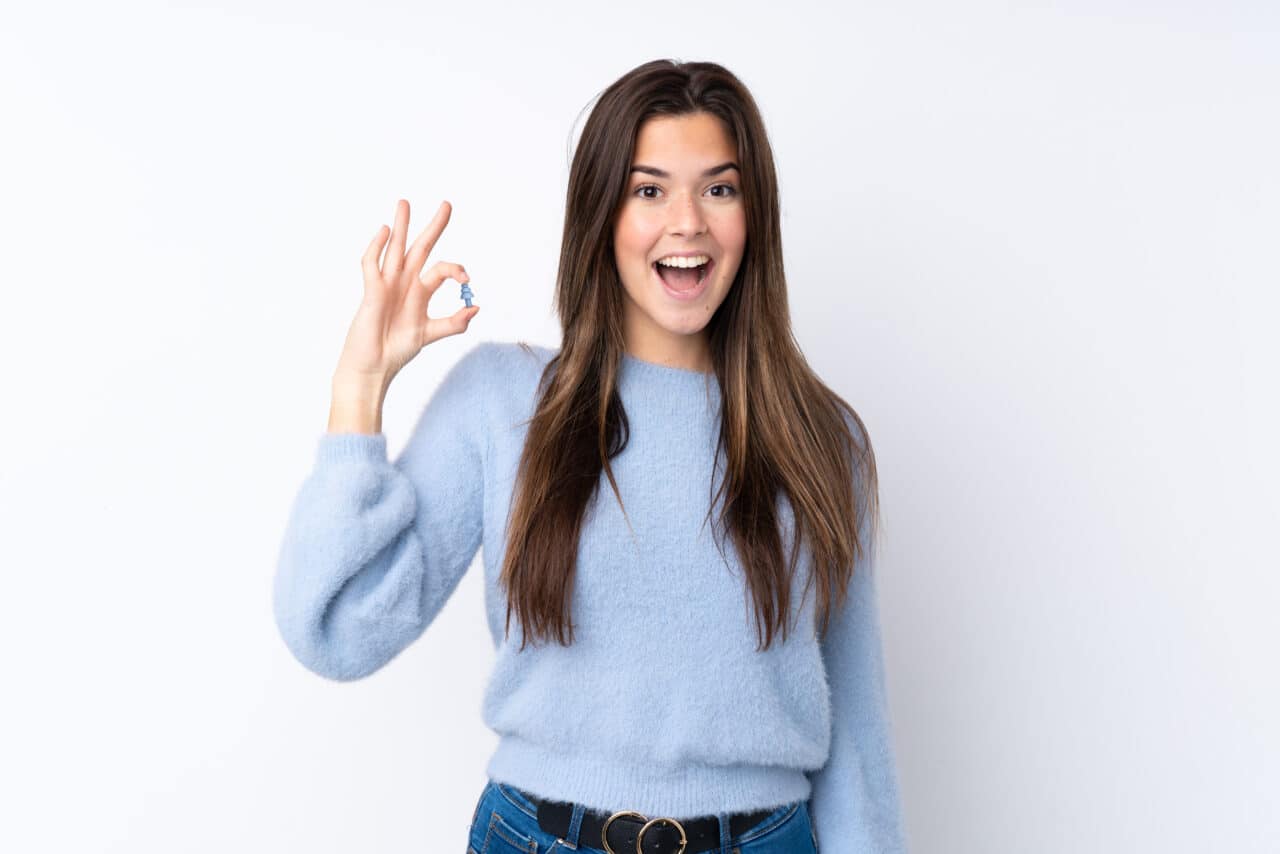
How long can you safely listen to loud music before damage occurs?
The relationship between volume and time is not linear, which surprises a lot of people. The louder the sound, the faster the damage accumulates. At 85 dB, you have around eight hours of relatively safe exposure. At 100 dB, that window drops to around 15 minutes. At 110 dB, which is a typical festival sound level according to the CDC, you are looking at roughly two to three minutes before you risk permanent hearing damage.
What makes this trickier is that most festivals run for hours, and the sound levels fluctuate. You might spend time near the front of the stage, then step back, grab a drink, and return. Each of those exposures adds up. Your ears do not reset between songs or sets. The total noise dose you accumulate over an entire day matters, and it can easily exceed safe limits without you realizing it.
The World Health Organization recommends keeping recreational sound exposure below 100 dB LAeq averaged over 15 minutes, with peak levels not exceeding 135 dB. Most US festivals have no federal regulation requiring them to meet any standard at all, which means the responsibility for protecting your hearing falls largely on you.
What are the signs of hearing damage after a concert?
The most common sign is tinnitus, that ringing, buzzing, or hissing sound in your ears after a loud event. A lot of people experience this and assume it will just go away, and often it does fade within a day or two. But that temporary ringing is your ears telling you something went wrong. Even when the ringing resolves completely, research suggests that progressive damage to the inner ear can continue for months after the exposure.
Other signs to watch for include muffled hearing, a feeling of fullness in the ears, or difficulty following conversations in noisy environments. That last one is sometimes called hidden hearing loss, a condition where standard hearing tests come back normal but you genuinely struggle to understand speech in busy settings. It is more common than most people realize, and it often traces back to repeated noise exposure over years of attending live events.
If your symptoms last more than 48 hours after a festival, it is worth speaking with an audiologist. The damage caused by excessive sound exposure is largely irreversible. There is currently no cure, only tools to manage the effects.
How far away from the speakers should you stand at a festival?
Distance helps, but it does not solve the problem. Sound levels drop as you move further from a source, but at a large festival with a powerful PA system, even standing well back in the crowd can expose you to 95 to 100 dB or more. Moving away from the main speakers reduces your exposure, but the reduction is often smaller than people expect in an outdoor festival environment where sound carries widely.
A practical approach is to use the quiet zones that better-organized festivals now provide. These are dedicated spaces away from the main stages where sound levels are kept below 70 dB, giving your ears a chance to recover during a long day. Taking 15 to 20 minute breaks in a quiet area every couple of hours meaningfully reduces your total noise dose over the course of the event.
That said, distance alone is not a reliable strategy if you actually want to watch the acts you came to see. Standing 50 meters back might reduce your exposure, but it also puts you far from the experience. Wearing concert earplugs is the more practical solution, because it lets you stay close to the music without paying for it with your hearing.
Do earplugs ruin the sound quality at a live music event?
This is the question that stops most people from wearing hearing protection at festivals, and it is a fair concern. Foam earplugs, the kind you roll up and shove in your ears, do muffle sound significantly. They tend to block high frequencies more than low ones, which makes music sound dull and bass-heavy. That is not a great experience, and it explains why so many people try them once and never bother again.
High-fidelity earplugs work differently. They are designed to reduce volume evenly across the frequency spectrum, which means the music still sounds like music, just at a safer volume. You can still hear the detail in the mix, follow the lyrics, and feel the energy of the performance. Many people who switch to high-fidelity earplugs for concerts say they actually enjoy the experience more, because they are not fighting the physical discomfort of extreme volume.
The difference in sound quality between foam earplugs and high-fidelity alternatives is genuinely noticeable. If you have ever avoided earplugs because you did not want to ruin the sound, it is worth trying a proper music earplug before writing them off entirely.
What type of earplugs are best for music festivals?
For festivals, you want earplugs that do three things well: reduce volume to a safe level, preserve sound quality, and stay comfortable across a full day of wear. Foam earplugs check the first box but fail the other two. Custom-molded earplugs check all three but cost several hundred dollars and require a visit to an audiologist. High-fidelity universal-fit earplugs sit in the middle and are the most practical option for most festival-goers.
When you are choosing earplugs for concerts, look for a few specific things:
- SNR rating of at least 20 dB to bring festival sound levels down to a safer range
- Flat attenuation so the sound stays balanced rather than muffled
- A comfortable, secure fit that holds through movement, dancing, and hours of wear
- Reusability so you are not throwing away a new pair every time you go out
Material also matters. Silicone earplugs are common and affordable, but they tend to be less durable and can feel loose over time. Earplugs made from denser synthetic rubber hold their shape better, provide a more consistent seal, and last significantly longer, which makes them a better investment if you attend multiple events a year.
Can one festival cause permanent hearing loss?
Yes, it can. This is not a worst-case scenario reserved for people standing directly in front of a speaker stack. A single event at extreme volume, particularly if you are close to the source and not wearing protection, can cause permanent damage. Research on acoustic trauma shows that noise doses between 25 and 45 times the allowable daily limit consistently result in permanent ear damage in laboratory conditions. At a loud festival, it is possible to exceed the daily noise limit many times over in a single afternoon.
The damage happens in the inner ear, where tiny hair cells convert sound waves into signals your brain can interpret. These cells do not regenerate. Once they are gone, they are gone. A single very loud exposure can destroy enough of them to cause a measurable, permanent reduction in hearing ability or trigger chronic tinnitus that does not go away.
The encouraging part is that this is entirely preventable. Wearing properly fitted earplugs for festivals reduces your exposure to safe levels without taking anything away from the experience. You can stand where you want, stay for the whole set, and leave without your ears ringing.
That is exactly what we designed the Shush Acoustic earplugs for. Our ceramic Venturi filter reduces sound by 23 dB while keeping the music clear and balanced, not muffled. The filter sits inside the earplug rather than at the tip, which means you are protected even if your ear canal only fits the first layer. Made from hypoallergenic synthetic rubber, they are durable enough to last at least 365 days of use, comfortable enough to wear all day, and designed to let you hold a conversation without taking them out. One pair, one festival season, and your hearing stays intact. That is a trade worth making.
Frequently Asked Questions
How do I know if my earplugs are fitted correctly at a festival?
A properly fitted earplug should create a noticeable seal in your ear canal — you will feel a slight pressure and the ambient noise around you will drop immediately. For foam earplugs, roll them thin, insert them while pulling your ear up and back, and hold them in place for 20 to 30 seconds while they expand. For high-fidelity earplugs like silicone or synthetic rubber options, gently twist them inward until they sit snugly without discomfort. A quick test: cup your hands over your ears — if the sound level does not change much, your earplugs are not sealing properly and you are not getting the protection you think you are.
Can I wear earplugs and still hold a normal conversation at a festival?
Yes, with the right earplugs. High-fidelity earplugs with flat attenuation are specifically designed to reduce overall volume without eliminating speech clarity, so you can still talk to the people around you without shouting or removing them. Foam earplugs tend to muffle speech significantly, which is one of the reasons people pull them out and leave them out. If being able to communicate comfortably is important to you — and at a festival it usually is — look for earplugs marketed for music or concerts rather than industrial or sleep use, as those are engineered with speech intelligibility in mind.
Is it too late to protect my hearing if I have already been to many loud concerts without earplugs?
It is never too late to start protecting the hearing you have left. While any damage that has already occurred is permanent, the hearing you still have today is absolutely worth preserving. People who have attended years of shows without protection are actually at higher risk going forward, because their hair cells are already under greater cumulative stress and have less resilience to additional noise exposure. Starting to wear high-fidelity earplugs now will not reverse past damage, but it can meaningfully slow or stop further deterioration — and that matters a great deal for your quality of life over the next several decades.
What should I do if I forget my earplugs at a festival?
First, check whether the festival has a vendor or merch area selling earplugs — many larger events now stock them on-site, and some festivals even distribute free foam pairs at information booths. If you cannot find any, use the quiet zones and take regular breaks away from the main stage every hour or so to reduce your total noise dose. Keeping your distance from the speaker stacks and avoiding standing directly in front of them will also help, though it will not fully protect you. Going forward, keep a spare pair in your wallet, festival bag, or car so you are never caught without them again.
How often should I replace my reusable earplugs?
For reusable high-fidelity earplugs, the answer depends on the material and how well you maintain them. Silicone earplugs typically last several months before they begin to lose their shape and seal consistency. Earplugs made from denser synthetic rubber, like the Shush Acoustic earplugs mentioned above, are built to last at least a full year of regular use. The key signs it is time to replace them are visible degradation of the material, a looser fit than when they were new, or any cracking around the filter housing. Clean them regularly with mild soap and water, store them in their case when not in use, and they will stay effective for much longer.
Are children and teenagers more vulnerable to hearing damage at festivals?
Yes, significantly so. Young ears are more sensitive to noise-induced damage than adult ears, and the effects of early hearing loss can compound over a lifetime of exposure. Teenagers in particular tend to underestimate the risk because hearing damage is painless and gradual — there is no immediate feedback that something is going wrong. If you are bringing kids or teens to a festival, fitting them with properly sized earplugs is just as important as it is for adults, arguably more so. Look for earplugs specifically sized for younger ear canals, as adult-sized plugs will not seal correctly and will provide far less protection than the label suggests.
Should I see an audiologist before attending festivals if I already have some hearing loss?
Yes, and it is a smart move even if you are not sure whether your hearing has been affected. An audiologist can run a baseline hearing test that gives you a clear picture of where your hearing stands today, which is useful both for monitoring future changes and for getting personalized advice on the level of protection you need. If you already have some degree of hearing loss or tinnitus, a standard 20 to 25 dB earplug may not be sufficient, and a professional can help you determine whether custom-molded options or a higher attenuation rating would better suit your situation. Many audiologists also offer tinnitus management guidance if you are already dealing with symptoms.
Related Articles
- Do earplugs come in different sizes?
- 5 best earplugs for manufacturing and industrial work
- How do musicians protect their hearing at live shows?
- Are reusable concert earplugs better than disposable foam ones?
- Are custom-molded earplugs worth the cost for occasional concertgoers?
- Can earplugs for nightclubs help people with sensory sensitivities enjoy going out?
- Are earplugs for nightclubs actually worth wearing?
- Do earplugs for football games affect how you hear the referee's whistle?
- Can you still talk to friends at a club whilst wearing earplugs?
- What is noise-induced hearing loss and can earplugs prevent it?
- What type of ear protection works best in a nightclub?
- Can concert earplugs help with sensory overload at live events?
- How do sound engineers and event crew protect their hearing at stadium shows?
- How many hours in a nightclub is too long without ear protection?
- What are the best types of hearing protection for festival crowds?