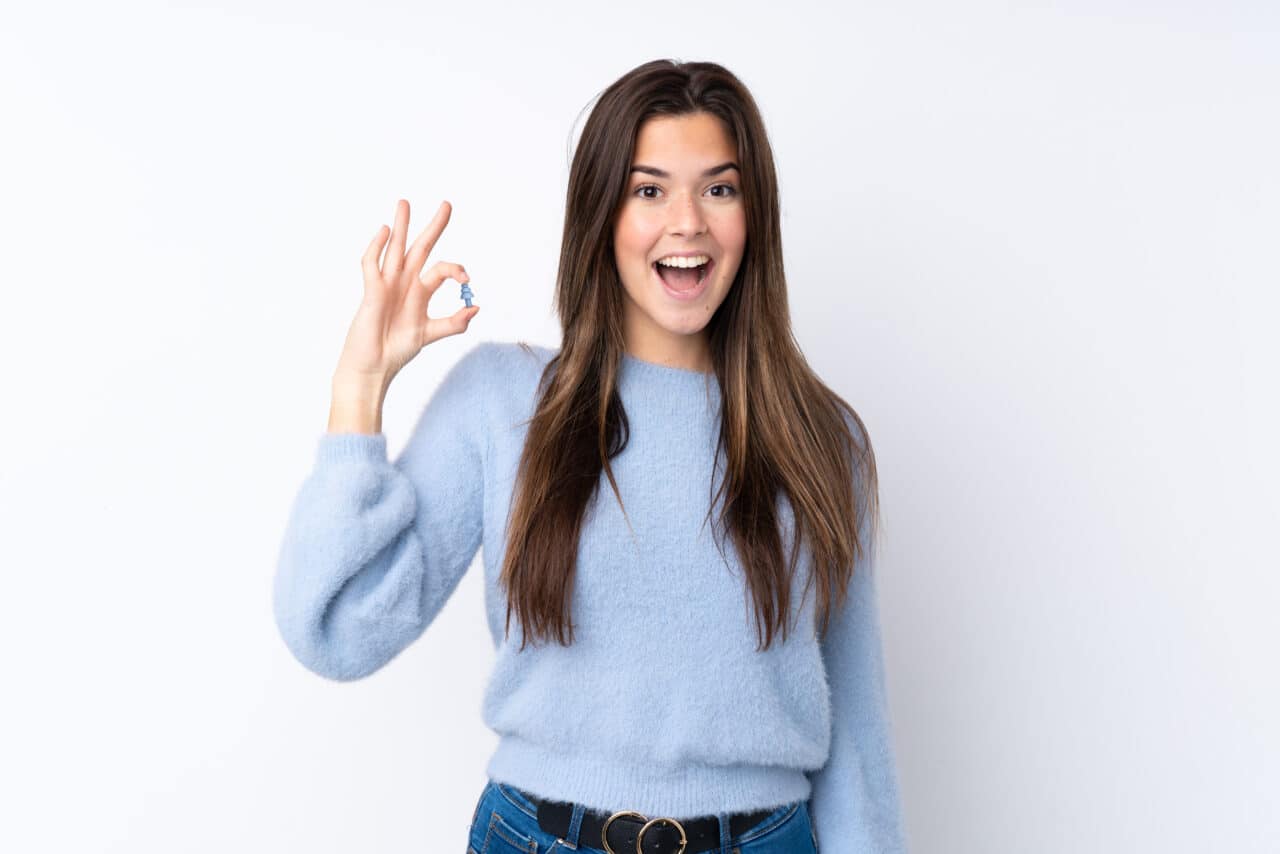
Yes, you should wear earplugs to concerts, and not just the loud ones. Concert venues in the US regularly push sound levels past 110 dB, which can cause permanent hearing damage in just a few minutes of exposure. The good news is that wearing earplugs does not mean missing out on the music. High-fidelity earplugs are designed to lower the volume while keeping the sound clear, so you hear everything the way it was meant to sound, just at a safer level.
Can concerts actually damage your hearing?
Yes, and faster than most people realize. The CDC reports that concert venues and clubs regularly hit sound levels between 105 and 110 dB. At 110 dB, you have roughly three minutes of safe exposure before the noise starts causing real damage. A typical concert lasts two hours or more, which means that without protection, your ears are absorbing a noise dose far beyond what is considered safe.
The damage happens in your inner ear, where tiny hair cells pick up sound vibrations and send signals to your brain. Loud noise breaks these cells down over time, and once they are gone, they do not grow back. There is no cure for noise-induced hearing loss, only management tools like hearing aids. The WHO has flagged recreational noise as one of the leading preventable causes of hearing damage worldwide, with nearly 40% of young adults regularly exposed to dangerous sound levels in entertainment settings.
The tricky part is that the damage is cumulative. One loud concert might not leave you deaf, but ten, twenty, or fifty concerts over the years add up. And there is something called hidden hearing loss, where the damage does not show up on standard hearing tests but still affects your ability to understand speech in noisy environments. You may not notice it until it is already significant.
What does hearing damage from loud music feel like?
Most people have experienced it without realizing what it was. That ringing in your ears after a festival or concert is called tinnitus, and it is your inner ear telling you something went wrong. Sometimes it fades after a few hours of rest. Other times it sticks around for days. And in some cases, it never fully goes away.
Alongside the ringing, you might notice that sounds seem muffled or slightly distorted after a loud event, almost like your ears are underwater. You might find yourself asking people to repeat themselves more often than usual. These are all signs that your ears took a hit. The frustrating thing is that even when the ringing in your ears after a festival stops, the underlying damage to your inner ear may continue progressing for months without any obvious symptoms.
Do earplugs ruin the sound quality at concerts?
Standard foam earplugs can, yes. They muffle high frequencies more than low ones, which makes music sound dull and bassy. But high-fidelity earplugs work very differently. They are designed to reduce volume evenly across the full frequency range, so the music still sounds balanced and clear, just quieter. Think of it less like stuffing cotton in your ears and more like turning down the volume on a speaker without touching the equalizer.
Many musicians and audio engineers wear high-fidelity earplugs during performances for exactly this reason. The goal is not to block out the experience but to bring it into a safe and comfortable range. If you have ever left a concert with ringing ears and felt like the music was too loud to fully enjoy anyway, a good pair of earplugs would have actually improved the experience, not just protected your hearing.
When should you wear earplugs at a concert?
The short answer is: whenever you are in a loud venue. But here are some situations where hearing protection for festivals and concerts becomes especially important:
- You are standing near the speakers or the stage. Sound levels close to the front can be significantly higher than elsewhere in the venue.
- You plan to attend multiple events in a short period. The cumulative effect of repeated exposure is what causes the most long-term damage.
- The event lasts several hours. Even moderately loud venues become risky over extended periods.
- You already notice ringing in your ears after events. That is a clear signal your ears need more protection, not less.
- You are at an outdoor festival. Multi-day festivals combine high volume with long durations, making festival ear protection one of the smartest investments you can make.
There is no threshold of loudness below which your hearing is completely safe at a concert. If a venue is loud enough that you have to raise your voice to talk to the person next to you, it is loud enough to cause damage over time.
What are the different types of earplugs for concerts?
Not all earplugs are built the same, and the type you choose makes a big difference in both protection and experience.
Foam earplugs
These are the cheap, disposable kind you find at pharmacies. They offer high noise reduction but muffle sound significantly, which makes them a poor choice for enjoying live music. They are better suited for sleeping or working in industrial environments.
Standard silicone earplugs
A step up from foam in terms of comfort and reusability, but still not ideal for concerts. They tend to reduce high frequencies more than low ones, which distorts the sound in a similar way to foam plugs.
High-fidelity earplugs
These are the go-to choice for concert and festival earplugs. They use acoustic filters to reduce volume evenly across frequencies, preserving the full sound profile of the music. They are reusable, comfortable for extended wear, and designed specifically for environments where you want to protect your hearing without losing the experience.
Custom-molded earplugs
Made from impressions of your ear canal by an audiologist, these offer the best possible fit and sound quality. They are significantly more expensive but worth considering if you attend events very regularly.
How do you choose the right earplugs for live music?
When choosing earplugs for concerts, look at these factors:
- Attenuation level. This tells you how many decibels of noise the earplugs reduce. For most concerts, an SNR (Single Number Rating) of around 20 to 25 dB is a solid range. It brings a 110 dB venue down to a safer 85 to 90 dB.
- Flat frequency response. This is the feature that separates high-fidelity earplugs from foam ones. A flat response means all frequencies are reduced equally, keeping the music sounding natural.
- Fit and comfort. Earplugs that do not fit properly offer less protection and are more likely to be taken out during the event. Look for options with multiple size tips or a universal fit design.
- Reusability. If you attend events regularly, reusable earplugs are a better investment and more sustainable than disposable options.
- Material. Hypoallergenic materials are worth seeking out if you have sensitive ears or plan to wear them for long periods.
How do you wear earplugs at a concert without it being awkward?
Honestly, earplugs are becoming more common at concerts and festivals, and the stigma around wearing them is fading fast. But if you still feel self-conscious, here are a few practical things that help.
Put them in before you arrive or on the way in, rather than fumbling with them once you are already in the crowd. High-fidelity earplugs sit flush in the ear canal and are barely visible, so most people will not even notice you are wearing them. And because they preserve sound quality so well, you can still hold a normal conversation without taking them out, which removes one of the biggest social barriers people associate with wearing earplugs at events.
It also helps to think of it the same way you think about wearing sunscreen at an outdoor festival. Nobody questions it, and nobody should. Protecting your hearing is just good sense, and the more people you see doing it, the more normal it becomes. If a friend notices, just tell them what you told us: you can still hear everything perfectly, just without the damage.
If you are looking for a high-fidelity option that genuinely delivers on sound quality, our Shush Acoustic earplugs are built for exactly this. We designed them with a ceramic Venturi-shaped filter that reduces sound by 23 dB while keeping the music balanced and undistorted. Unlike standard silicone or foam alternatives, the ceramic filter inside our earplugs conducts sound more accurately, so what you hear is the music as it was meant to sound, just at a volume your ears can handle. They are made from hypoallergenic synthetic rubber, last at least a full year of regular use, and come in plastic-free packaging. We built them for people who love live music and want to keep loving it for decades to come.
Frequently Asked Questions
How do I know if my current earplugs are actually working at a concert?
A good test is the conversation check: if you can hold a normal conversation with someone next to you without shouting, your earplugs are likely doing their job. You can also download a free decibel meter app on your phone to measure the ambient sound level at the venue. If you are still registering above 85 dB with your earplugs in, consider upgrading to a higher-attenuation option or repositioning them for a better seal, since an improper fit is one of the most common reasons earplugs underperform.
What should I do if I already have ringing in my ears after a concert?
Give your ears immediate rest by stepping away from loud environments and avoiding headphones or earbuds for at least 24 to 48 hours. Staying hydrated and getting a full night of sleep can also support your ears' natural recovery process. If the ringing persists beyond a couple of days or is accompanied by muffled hearing, schedule an appointment with an audiologist as soon as possible, since early intervention can help prevent further progression and rule out more serious conditions.
Can I still wear earplugs if I have small or unusually shaped ear canals?
Absolutely. Most high-fidelity earplugs come with multiple tip sizes specifically to accommodate different ear canal shapes and sizes. If standard universal-fit options still feel uncomfortable or keep falling out, custom-molded earplugs made by an audiologist are the best solution, as they are cast directly from an impression of your ear canal for a perfect, secure fit. Getting the fit right is worth the extra effort, because an earplug that sits loosely offers significantly less protection than one that seals properly.
Is it safe to wear earplugs at every concert, or will my ears become dependent on them?
There is no such thing as ear dependency from wearing hearing protection — that is a common misconception. Your ears do not become weaker or less capable of handling sound because you protect them regularly. In fact, the opposite is true: consistently protecting your hearing preserves your baseline sensitivity over time, meaning you will likely enjoy music more vividly in the long run than someone who skips protection and accumulates gradual damage.
How do I properly insert high-fidelity earplugs to get the best seal?
For most high-fidelity earplugs with silicone or rubber tips, you simply insert the earplug gently into the ear canal and give it a slight twist until it feels snug and secure — no rolling or compressing required, unlike foam earplugs. A proper seal means the ambient noise around you should noticeably drop in volume and the sound should feel balanced rather than hollow or boomy. If you hear more bass than usual or the music sounds uneven, try adjusting the depth of insertion or switching to a different tip size.
Are there any situations at a concert where it is okay to take my earplugs out temporarily?
If you are stepping outside the venue or into a noticeably quieter area like a restroom or outdoor courtyard, removing them briefly is fine. However, avoid the temptation to pull them out while standing near the stage or speakers, even just for a song or two, since those peak exposure moments are often when the most damage occurs. If you need to have a conversation inside the venue, high-fidelity earplugs are specifically designed to let you do that without removing them, which removes the biggest practical reason most people take them out mid-show.
How do I get my friends or partner on board with wearing earplugs at concerts?
The most effective approach is to let them try a pair before dismissing the idea — most skepticism comes from assuming earplugs will ruin the sound, and a quick demo with high-fidelity plugs usually changes that opinion fast. You can also share the three-minute stat: at 110 dB, safe exposure time is just three minutes, and most concerts run two hours or more. Framing it as protecting something you both love — the ability to keep going to live music for decades — tends to land better than leading with fear of hearing loss.
Related Articles
- Can noise exposure affect sleep quality in workers?
- What are the legal requirements for hearing protection at work?
- How does noise affect worker health?
- How loud is a typical nightclub compared to safe hearing levels?
- How do musicians on stage avoid hearing damage during live shows?
- Can earplugs for music sound change how instruments sound to your ear?
- Do I need earplugs for my first EDM event?
- What happens to your hearing after repeated exposure to noise from loud events?
- What should you look for when buying earplugs for music sound protection in 2026?
- Why do regular foam earplugs muffle music so badly at concerts?
- Can wearing ear protection at clubs improve your experience on the dance floor?
- Are custom-molded earplugs a good investment for frequent clubbers?
- Are custom earplugs worth it for regular festival-goers?
- What causes hearing loss at loud concerts?
- What are the best types of hearing protection for festival crowds?