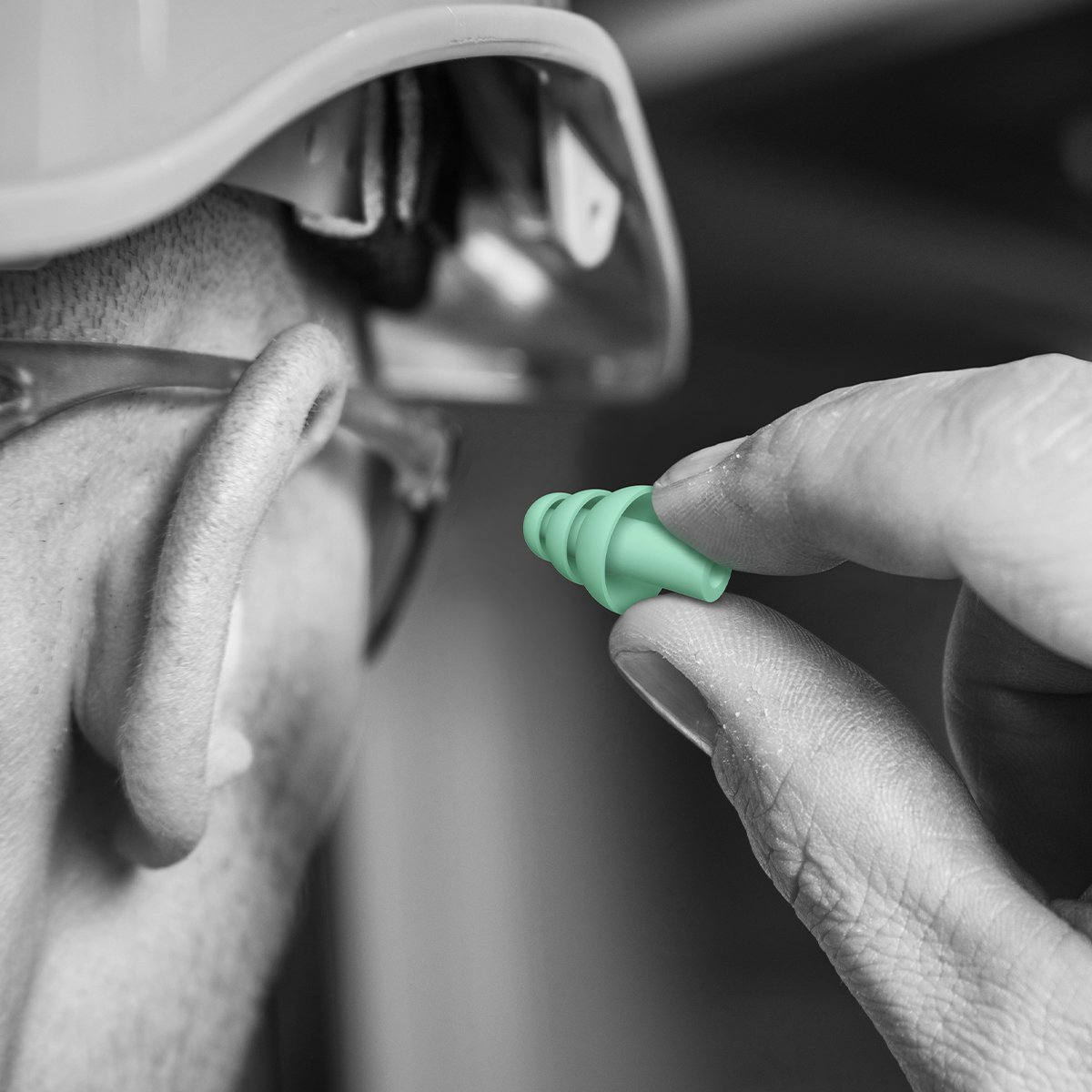
Yes, occupational noise causes fatigue. Prolonged exposure to loud workplace environments forces your brain and body to work harder to process sound, filter out noise, and stay alert, which drains energy over time. This effect is well-documented across industries like construction, manufacturing, and transportation. Below, we unpack how noise fatigue works, what it feels like, and what you can do about it.
How does loud noise physically tire the body?
Loud noise triggers a sustained stress response in the body. When your ears detect high-intensity sound, your nervous system interprets it as a potential threat and activates a low-level fight-or-flight reaction. Your heart rate rises slightly, muscles tense, stress hormones increase, and your brain works overtime trying to process and filter the noise. Over a full workday, that constant physiological effort adds up to real physical exhaustion.
The auditory cortex, the part of your brain responsible for processing sound, requires significant cognitive resources to make sense of loud or complex noise environments. In noisy workplaces, workers often strain to hear speech, concentrate despite background noise, and stay focused on safety-critical tasks simultaneously. This mental effort compounds the physical stress response, leaving workers feeling drained even when their job involves little physical labor.
There is also a hormonal dimension. Elevated cortisol levels from prolonged noise exposure interfere with the body’s natural recovery rhythms. Workers in high-noise environments often report difficulty sleeping well, which creates a cycle in which fatigue from the workday is not fully resolved overnight.
What are the symptoms of noise-induced fatigue?
Noise-induced fatigue shows up as a combination of physical, cognitive, and emotional symptoms. The most common signs include persistent tiredness at the end of a shift, difficulty concentrating, irritability, headaches, and a sense of mental fog. Workers may also notice they feel more exhausted than the physical demands of their job would explain.
Beyond general tiredness, noise fatigue often produces specific symptoms that are easy to overlook:
- Increased errors and slower reaction times as cognitive resources are depleted
- Difficulty communicating with colleagues, especially in already noisy environments
- Tension headaches from sustained muscle tightening in the neck and shoulders
- Tinnitus, a ringing or buzzing in the ears after a noisy shift
- Reduced motivation and a lower threshold for frustration
- Sleep disturbances, including trouble falling asleep despite feeling tired
These symptoms are not just uncomfortable. They also increase the risk of workplace accidents, because a fatigued worker is less attentive and less reactive.
Which workplaces and jobs carry the highest noise fatigue risk?
Jobs with continuous or high-intensity noise exposure carry the greatest risk of noise fatigue. Manufacturing, construction, mining, aviation ground work, and transportation top the list. Workers in these environments are often exposed to noise levels well above 85 dB for extended periods, which is the threshold at which hearing protection becomes important and fatigue risk climbs sharply.
Some specific roles that carry elevated risk include:
- Factory floor and assembly line workers operating heavy machinery
- Construction workers using power tools, drills, and compressors
- Airport ground crew working near jet engines
- Truck and bus drivers dealing with prolonged engine and traffic noise
- Warehouse workers in facilities with constant forklift and conveyor noise
- Musicians and sound technicians exposed to amplified sound regularly
Office workers are not immune either. Open-plan offices with constant ambient chatter, phone noise, and HVAC hum create a lower-level but persistent noise load that contributes to cognitive fatigue over the course of the day, even without reaching harmful decibel levels.
Is noise fatigue the same as hearing damage?
No, noise fatigue and hearing damage are not the same thing, though they often occur together. Noise fatigue is a temporary physiological and cognitive response to prolonged noise exposure that typically resolves with rest. Hearing damage, specifically noise-induced hearing loss, is a permanent structural change to the hair cells inside the cochlea that does not recover.
The important distinction is that noise fatigue can happen even at sound levels that do not cause immediate hearing damage. Moderate but persistent noise, such as a busy open office or a loud restaurant kitchen, can generate significant fatigue without crossing the threshold for hearing loss. Conversely, very loud noise can cause hearing damage quickly, sometimes in a single exposure, before fatigue even registers as a symptom.
However, the two conditions share a common cause: excessive noise exposure. Workers who experience regular noise fatigue are often in environments where hearing damage risk is also elevated. Treating them as separate problems is a mistake. Addressing noise exposure at the source protects against both.
Can hearing protection reduce workplace fatigue?
Yes, wearing hearing protection in noisy workplaces reduces fatigue. By lowering the sound level reaching the ears, earplugs reduce the intensity of the stress response triggered by loud noise. The brain no longer needs to work as hard to process and filter sound, and the body’s physiological arousal decreases, which means less energy is spent just surviving the noise environment.
Workers who wear well-fitted, high-quality hearing protection consistently report feeling less drained at the end of their shift. This is not just a comfort benefit. Reduced fatigue translates to better concentration, fewer errors, and improved safety awareness throughout the day.
The quality of the hearing protection matters here. Foam earplugs that muffle all sound indiscriminately can actually increase cognitive load in some situations, because workers strain to hear speech or important signals through them. High-fidelity earplugs that reduce volume while preserving sound clarity are a better fit for environments where communication and situational awareness still matter. Our Shush Worker earplugs are designed exactly for this: an SNR of 23 dB of protection without sacrificing the clear, natural sound quality that lets you stay aware and communicate on the job. Built from durable, hypoallergenic synthetic rubber, they are comfortable enough to wear all day and last at least 365 days of regular use.
How much noise exposure is too much before fatigue sets in?
Fatigue from noise can begin to accumulate at sound levels as low as 65 to 70 dB with prolonged exposure, which is roughly the level of a busy open office or constant background traffic. At these levels, the brain is continuously processing unwanted sound, and cognitive fatigue builds over hours. At or above 85 dB, the physical stress response intensifies, and fatigue accumulates significantly faster.
Duration matters as much as intensity. A brief exposure to 90 dB is far less fatiguing than eight hours at 80 dB. The body can recover from short, intense noise events relatively quickly. It is the sustained, unrelenting nature of occupational noise that makes workplace environments particularly draining.
Some practical reference points to put noise levels in context:
- 65 to 70 dB: Open-plan office, light traffic, background conversation
- 80 to 85 dB: Busy restaurant kitchen, heavy traffic, loud machinery at a distance
- 90 to 100 dB: Power tools, factory floor, construction equipment nearby
- Above 100 dB: Jackhammers, heavy industrial machinery, jet aircraft ground level
There is no single threshold at which fatigue suddenly switches on. It is a gradual process influenced by the noise level, how long you are exposed, whether the noise is predictable or random, and individual factors like stress and sleep quality. But as a general rule: if you are regularly raising your voice to be heard by someone standing nearby, the noise level is high enough to be generating meaningful fatigue over a full shift.
Frequently Asked Questions
How long does it take to recover from noise-induced fatigue after a shift?
For most workers, noise-induced fatigue begins to resolve within a few hours of leaving the noisy environment, provided they get adequate rest and quality sleep. However, if noise exposure is a daily occurrence, incomplete overnight recovery can cause fatigue to accumulate across the workweek, leaving workers feeling progressively more drained by Friday than they did on Monday. Taking deliberate steps to decompress after a shift — such as spending time in a quiet environment, limiting screen time, and prioritizing 7 to 9 hours of sleep — can significantly speed up recovery and prevent that buildup.
What is the best way to get started with hearing protection if I've never worn earplugs at work before?
Start by identifying the noisiest parts of your workday — the tasks, equipment, or areas where you regularly have to raise your voice to be heard — and commit to wearing protection during those specific periods first. This makes the habit easier to build without feeling like a constant adjustment. From there, focus on fit: a poorly inserted or ill-fitting earplug provides far less protection than the packaging claims, so take the time to learn proper insertion technique or choose a reusable option with a consistent fit. If communication is part of your job, look for high-fidelity earplugs that preserve speech clarity rather than standard foam plugs that muffle everything indiscriminately.
Can noise fatigue affect my performance even if I feel fine during the shift?
Yes, and this is one of the most important things to understand about noise fatigue — it often impairs performance before workers consciously feel tired. Research on cognitive fatigue consistently shows that reaction times slow, error rates increase, and decision-making quality drops even when individuals report feeling alert and capable. In safety-critical jobs, this gap between perceived and actual performance is a real hazard. If your work environment is consistently loud, it is worth assuming some level of fatigue-related impairment is present and taking protective steps proactively, rather than waiting until you feel exhausted.
Are some people more susceptible to noise fatigue than others?
Yes, individual susceptibility varies quite a bit. People who are already sleep-deprived, under high stress, or dealing with underlying health conditions tend to experience noise fatigue more intensely and recover from it more slowly. Age can also be a factor, as older workers may find sustained noise environments more taxing on their auditory processing. Interestingly, people who are highly sensitive to sensory input — sometimes called high sensory processors — often report disproportionately high fatigue in noisy environments even at moderate decibel levels. If you find yourself more drained by noise than your coworkers seem to be, that is not unusual, and it is a legitimate reason to be more proactive about protection and recovery.
What can employers do to reduce noise fatigue risk beyond just issuing hearing protection?
Hearing protection is an important last line of defense, but the most effective approach starts with engineering and administrative controls. On the engineering side, employers can invest in quieter machinery, install sound-absorbing panels or barriers, and isolate the noisiest equipment in separate areas. On the administrative side, rotating workers through quieter tasks, scheduling mandatory quiet breaks away from the noise source, and limiting consecutive hours in high-noise areas can meaningfully reduce cumulative exposure. OSHA's Hierarchy of Controls provides a useful framework here: reducing noise at the source is always more effective than asking workers to manage it through PPE alone.
Does taking breaks in a quiet area actually make a difference, or is it just a minor comfort?
Taking breaks in a genuinely quiet environment makes a measurable difference, not just a psychological one. When the auditory system is removed from continuous noise stimulation, the stress hormones triggered by that noise begin to decrease, muscle tension eases, and the brain gets a chance to reduce its processing load. Even a 10 to 15 minute break in a low-noise space can help interrupt the fatigue accumulation cycle. The key word is "genuinely quiet" — stepping into a break room that is still loud with machinery, HVAC noise, or loud conversations does not provide the same benefit. If your workplace lacks a quiet recovery space, advocating for one is a worthwhile occupational health conversation to have with your supervisor or safety officer.
Can noise fatigue contribute to long-term health problems beyond just feeling tired?
Chronic noise fatigue — meaning repeated, unresolved fatigue from years of occupational noise exposure — is associated with a range of longer-term health concerns. Persistent elevation of stress hormones like cortisol is linked to cardiovascular strain, weakened immune function, and increased risk of anxiety and depression. Chronic sleep disruption, which noise fatigue often causes, compounds these risks further. The World Health Organization has identified occupational noise as one of the leading environmental contributors to preventable health burden, and the effects extend well beyond the ears. Addressing noise fatigue early, rather than treating it as a normal and unavoidable part of a noisy job, is genuinely a long-term health investment.