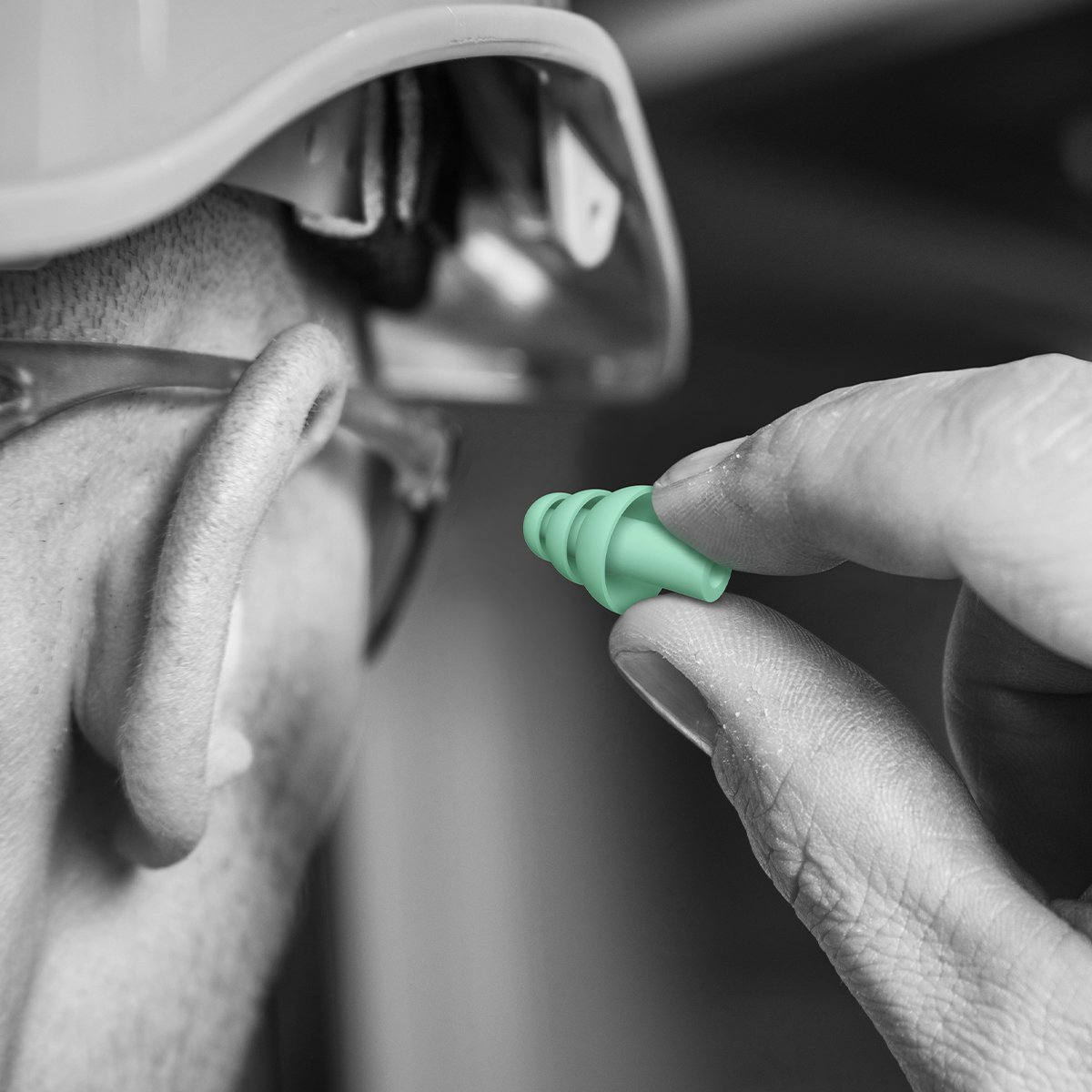
Yes, earplug comfort directly affects compliance rates. Workers who find earplugs uncomfortable are significantly more likely to remove them, wear them inconsistently, or stop using them altogether. Discomfort is consistently cited as the top reason for non-compliance in occupational hearing protection programs. Fit, material, and sound quality all play a role in whether workers actually keep earplugs in throughout a full shift. The questions below unpack each factor so you can understand what drives compliance and how to improve it.
Why do workers stop wearing earplugs?
Workers stop wearing earplugs primarily because of physical discomfort, poor fit, and the feeling that earplugs interfere with their ability to communicate or hear important sounds on the job. These practical frustrations outweigh the abstract risk of future hearing damage, especially when that damage builds up gradually and is not immediately noticeable.
Physical irritation is the most common trigger. Earplugs that create pressure inside the ear canal, cause itching, or feel loose enough to constantly need readjusting become an active distraction rather than a passive form of protection. Over the course of an eight or ten hour shift, even minor discomfort compounds into something workers actively want to remove.
Communication is another major barrier. When earplugs muffle sound so heavily that workers cannot hear colleagues, machinery alerts, or verbal instructions clearly, they face a real workplace problem. The instinct is to pull out the earplugs temporarily, and that temporary removal often becomes habitual. Once the habit forms, compliance drops sharply.
There is also a perception issue. Many workers associate earplugs with the cheap, disposable foam type and assume all hearing protection will feel the same way. When that expectation is never challenged, workers tolerate discomfort as the default rather than looking for a better option.
How does earplug comfort directly affect compliance rates?
Earplug comfort affects compliance by determining whether workers choose to keep earplugs in for the full duration of exposure. Even brief periods without protection during a loud shift expose the ears to cumulative damage, so consistent wear matters far more than occasional use. A comfortable earplug that workers forget they are wearing provides far better real-world protection than a high-rated earplug that gets removed after an hour.
Research in occupational health consistently shows that the actual protection a worker receives is much lower than the rated attenuation on the packaging when fit and wear time are inconsistent. A product rated at 30 dB that is worn for only half a shift provides a fraction of that protection in practice. Comfort is what bridges the gap between rated performance and real-world performance.
Knowing how to get workers to wear earplugs more reliably starts with understanding that compliance is a behavioral outcome, not just a policy one. Rules and training help, but if the product itself creates discomfort, compliance will always be partial. The most effective hearing conservation programs combine clear guidance with equipment workers genuinely find tolerable to wear all day.
What makes an earplug comfortable enough to wear all day?
An earplug is comfortable enough for all-day wear when it creates a secure seal without applying sustained pressure, fits the shape of the ear canal without requiring frequent readjustment, and is made from a material that does not cause irritation over extended periods. Fit, material, and weight are the three factors that determine whether comfort holds up across a full shift.
Material matters more than most people realize. Foam earplugs compress and expand inside the ear canal, which creates a pressure sensation that grows more noticeable over time. Traditional silicone can feel rigid or slippery depending on the formulation. Soft synthetic rubber sits in a different category: it conforms more naturally to the individual shape of the ear canal, maintains its position without generating internal pressure, and is hypoallergenic, which helps prevent the skin irritation that causes many workers to remove earplugs before the shift ends.
Fit consistency also plays a role. An earplug that requires repeated reinsertion throughout the day adds cognitive load and frustration. A well-designed earplug with a stable fit lets workers focus on their work rather than their hearing protection. For workers with smaller ear canals, the position of the filter inside the earplug also matters: a filter placed inside rather than at the tip of the stem means the earplug still provides full protection even when only partially inserted.
Does sound quality affect how often people wear earplugs?
Yes, sound quality has a direct effect on how often workers wear earplugs. When earplugs muffle and distort sound, workers struggle to communicate, miss important audio cues, and feel cut off from their environment. That feeling of isolation is both uncomfortable and practically problematic, which pushes workers to remove earplugs in situations where they actually need them most.
High-fidelity earplugs address this by reducing volume without distorting the frequency balance of incoming sound. The result is that speech, machine alerts, and ambient sounds remain intelligible, just quieter. Workers can hold a conversation, hear a warning signal, or understand instructions without removing their earplugs. That functional difference changes the entire experience of wearing hearing protection during a shift.
The technology behind this matters. Standard foam or basic silicone earplugs block sound indiscriminately, cutting high frequencies more than low ones and creating the characteristic muffled effect. Earplugs with a purpose-built acoustic filter, particularly one made from a material with better sound conductivity, preserve the natural tonal balance of sound. Workers who experience that difference for the first time often describe it as hearing protection that does not feel like hearing protection, which is exactly the quality that drives consistent use.
What’s the difference between disposable and reusable earplugs for long-term compliance?
The key difference between disposable and reusable earplugs for long-term compliance is consistency. Disposable foam earplugs vary in fit quality each time they are inserted, degrade quickly, and are often treated as throwaway items that workers do not feel invested in. Reusable earplugs offer a stable, repeatable fit that workers can learn and rely on, which builds the habit of wearing them correctly.
From a practical standpoint, disposable earplugs require workers to insert them fresh each time, rolling and compressing foam before placing it in the ear canal. That process is technique-dependent, and poor insertion is one of the most common reasons workers receive far less protection than the product rating suggests. Reusable earplugs go in the same way every time, reducing variability and making correct fit more accessible.
There is also a psychological dimension. Workers who are given a quality reusable earplug tend to treat it as a piece of personal equipment rather than a consumable. That sense of ownership increases the likelihood they will carry it, maintain it, and use it consistently. Disposables, by contrast, are easy to forget or misplace, which creates gaps in protection.
Long-term cost is worth noting too. A durable reusable earplug that lasts a full year or more has a lower cost per use than replacing disposables daily or weekly. For employers trying to build sustainable hearing protection programs, that cost efficiency also supports the case for investing in better equipment.
Which earplug type has the highest compliance rate?
Reusable, high-fidelity earplugs with a comfortable fit and clear sound quality consistently achieve the highest compliance rates in occupational settings. Workers are most likely to wear hearing protection all day when it is comfortable, easy to insert correctly, and does not interfere with their ability to communicate or stay aware of their environment.
Pre-molded reusable earplugs with an acoustic filter outperform foam disposables on every compliance-relevant dimension: they are more comfortable for extended wear, they maintain a more consistent fit, and they preserve sound clarity in a way that makes workers less likely to remove them when communication is needed. For workers in manufacturing, construction, or other high-noise environments, the combination of adequate attenuation and natural sound quality is what makes the difference between a product that gets used and one that ends up in a pocket.
If you are looking for a practical solution for workers exposed to heavy machinery and industrial noise, the Shush Worker earplugs are built exactly for that context. With an SNR of 23 dB, a ceramic filter that preserves clear, natural sound, and a durable synthetic rubber construction rated for at least 365 days of use, they address the core reasons workers stop wearing earplugs in the first place. We designed them so workers can stay protected without feeling cut off, which is what makes all-day compliance realistic rather than just a policy goal.
Frequently Asked Questions
How do I get workers to actually try a new earplug if they've already given up on hearing protection?
Start by acknowledging their frustration rather than defaulting to policy reminders. Let workers try a new earplug during a low-pressure moment, such as a brief trial period at the start of a shift, so they can feel the difference firsthand without committing to a full day. Pairing that trial with a quick explanation of why this option is different from the foam disposables they may have used before helps reset expectations. Workers who experience a comfortable, clear-sounding earplug for the first time are far more likely to adopt it voluntarily than workers who are simply told to comply.
Can the wrong earplug size actually cause more harm than not wearing one at all?
An earplug that is the wrong size will not create a proper seal, which means it delivers significantly less attenuation than its rated NRR or SNR suggests while still creating enough discomfort to discourage consistent use. In that scenario, workers get the worst of both outcomes: reduced protection and increased irritation. Sizing matters most with pre-molded reusable earplugs, so offering more than one size option or choosing an earplug designed to accommodate a range of ear canal shapes is an important step in any hearing conservation program.
What's the best way to measure whether our hearing protection program is actually working?
The most direct measure is audiometric testing, which tracks changes in workers' hearing thresholds over time and can reveal whether noise-induced hearing loss is progressing despite a protection program being in place. Pairing that data with compliance observations, such as spot checks during shifts and worker self-reporting, gives you a fuller picture of where the gaps are. If audiometric results are trending in the wrong direction even with earplugs provided, that is a strong signal to investigate fit quality, wear time, and product selection rather than simply increasing enforcement.
Are there specific industries or job roles where earplug compliance tends to be especially low?
Compliance tends to be lowest in roles that require frequent verbal communication, such as team leads, machine operators who coordinate with colleagues, and workers in environments where verbal safety alerts are common. Construction sites and manufacturing floors with variable noise levels also see lower compliance because workers remove earplugs during quieter phases and fail to reinsert them when noise picks back up. Targeting these specific roles with high-fidelity earplugs that preserve speech clarity addresses the root cause of removal rather than treating non-compliance as purely a behavioral or disciplinary issue.
How often should reusable earplugs be replaced, and how do workers know when it's time?
A quality reusable earplug should be inspected regularly for signs of degradation, including hardening, cracking, discoloration, or a loss of the flexibility that allows it to seat properly in the ear canal. For earplugs rated for 365 days of use, a straightforward annual replacement schedule works well for most industrial programs and makes inventory planning simple. Workers should also replace an earplug immediately if it no longer holds a consistent fit, since a degraded seal means the attenuation rating no longer applies regardless of how the product looks on the outside.
Is a higher noise reduction rating always better when choosing earplugs for workers?
Not necessarily. A very high NRR or SNR can over-attenuate sound in environments where workers need to hear machinery alerts, spoken instructions, or warning signals, which leads to the same removal behavior that low-comfort earplugs cause. The goal is to select an earplug that brings noise exposure down to a safe level, typically below 85 dB, without creating unnecessary isolation. Matching the attenuation level to the actual noise exposure in your facility, rather than defaulting to the highest-rated product available, produces better compliance outcomes and keeps workers both protected and situationally aware.
What common mistakes do employers make when setting up a hearing conservation program?
The most common mistake is treating hearing protection as a procurement decision rather than a behavioral one, buying a product based on its rated attenuation and assuming that distribution equals compliance. Another frequent error is providing only one earplug option for an entire workforce without accounting for differences in ear canal size, shift length, or job function. Skipping fit training is also widespread, particularly with foam disposables where insertion technique has a significant impact on real-world protection. The most effective programs treat earplug selection, fit training, and worker feedback as ongoing processes rather than one-time checkboxes.