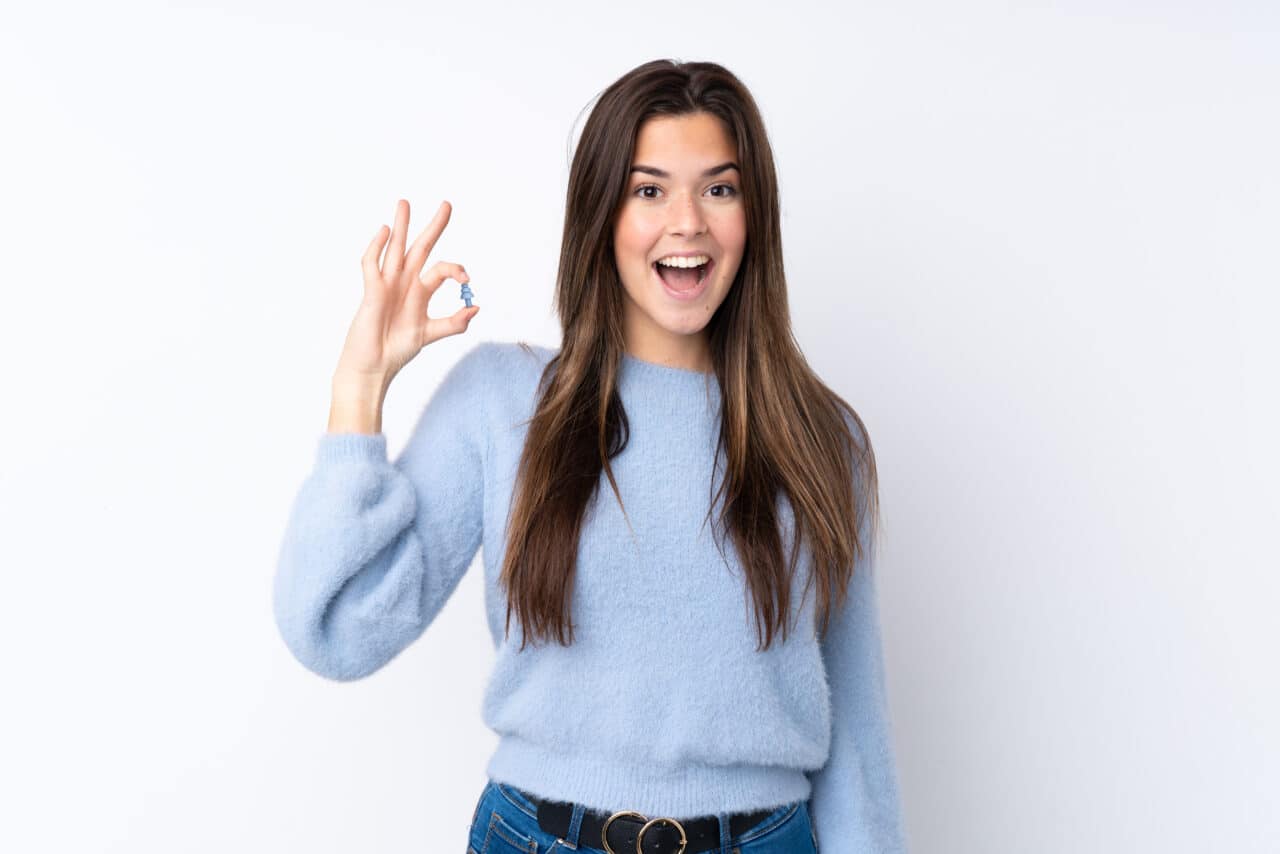
The safest way to protect your hearing at an outdoor stadium concert is to wear high-fidelity earplugs before the music starts. Stadium concerts regularly push sound levels past 110 dB, which is loud enough to cause permanent hearing damage within minutes. Standard foam earplugs work, but they muffle the music significantly. High-fidelity earplugs reduce volume evenly across frequencies, so you hear the show clearly while keeping your ears safe. Put them in before you enter the venue, not after your ears start ringing.
How loud are outdoor stadium concerts, and can they damage your hearing?
Outdoor stadium concerts are genuinely loud in ways most people underestimate. Sound levels at live events regularly hit 105 to 110 dB, and in some cases go higher depending on your position relative to the speakers. To put that in perspective, the CDC notes that at 105 to 110 dB, you have roughly three minutes of safe exposure before risking permanent hearing damage. Stadiums are not quiet environments, even outdoors where sound theoretically disperses more freely.
The damage happens at the cellular level. Loud sound breaks down the tiny hair cells inside your inner ear that convert sound waves into signals your brain can interpret. Once those cells are gone, they do not grow back. There is currently no cure for noise-induced hearing loss, only aids like hearing devices. What makes this worse is that damage is not always obvious right away. You might leave a concert with ringing ears that fade by morning and assume everything is fine. But research shows that even when short-term symptoms fully resolve, progressive and irreversible injury to the inner ear can continue for months afterward.
There is also something called hidden hearing loss, where damage does not show up on standard hearing tests but leaves you struggling to follow conversations in noisy environments. You may not notice it for years. The World Health Organization estimates that over 1.1 billion young people worldwide are at risk of hearing damage from unsafe listening practices, with nearly 40% of teenagers and young adults in middle- and high-income countries exposed to potentially damaging sound levels in recreational settings like concerts and clubs.
What are the safest ways to protect your hearing at a concert?
The most reliable thing you can do is wear earplugs rated for the noise level you are walking into. Beyond that, a few practical habits make a real difference:
- Wear earplugs before the music starts. Putting them in after the show begins means your ears have already absorbed some of the loudest bursts of sound.
- Move away from speakers. Sound intensity drops significantly with distance. Standing directly in front of a speaker stack is one of the worst positions you can be in, even with earplugs.
- Use quiet zones. The WHO recommends that venues provide rest areas where sound levels stay below 70 dB. If one is available, use it between sets to give your ears a break and reduce your total sound dose for the evening.
- Limit your exposure time. The longer you stay at high volumes, the more cumulative damage builds up. Taking breaks matters.
- Do not rely on distance alone outdoors. Open-air venues feel less intense than indoor clubs, but the actual sound levels at your position can still be dangerously high.
It is also worth knowing that the US has no federal noise regulations for entertainment venues. Unlike several European countries that have adopted standards limiting average sound levels and requiring hearing protection to be available, American concert-goers are largely on their own. That makes personal protection more important, not less.
What’s the difference between foam earplugs and high-fidelity earplugs for concerts?
Foam earplugs are cheap, widely available, and they do reduce sound. The problem is how they reduce it. Foam blocks high frequencies much more aggressively than low frequencies, which means music sounds muffled, distorted, and bass-heavy. Voices become harder to understand, and the overall experience is noticeably worse. For a construction site, that trade-off is fine. For a concert you paid good money to attend, it is frustrating.
High-fidelity earplugs work differently. They use acoustic filters designed to reduce sound levels more evenly across the frequency range. The result is that music sounds like music, just quieter. You can still hear the vocals clearly, follow the melody, and feel the rhythm without the sound becoming a muddy blur. You can also hold a conversation without pulling them out, which is a practical advantage anyone who has fumbled with foam plugs in a loud crowd will appreciate.
The attenuation level matters too. Look for earplugs with an SNR rating of at least 20 dB for loud concert environments. That rating tells you how many decibels of sound reduction you can expect across the frequency range. A well-designed high-fidelity earplug at 23 dB SNR brings a 110 dB venue down to around 87 dB, which is a much safer level for extended listening.
How do I choose the right earplugs for an outdoor stadium concert?
Start with fit. An earplug that does not seal properly in your ear canal will not deliver its rated protection, no matter how well it is designed. Look for earplugs with multiple size layers or tips so you can find what works for your ear shape. A secure, comfortable fit is the most important factor for consistent protection.
Next, check the filter type and attenuation rating. For earplugs at loud events like EDM events or outdoor stadium concerts, you want a filter that preserves sound quality while still delivering meaningful noise reduction. Ceramic filters outperform plastic alternatives in terms of sound conductivity, producing clearer, less distorted audio at reduced volumes.
Reusability is also worth considering. Foam earplugs are single-use, which adds up in cost and waste over time. Reusable earplugs made from durable synthetic rubber last considerably longer, giving you a much better cost-per-use and a more sustainable option. If you attend multiple events a year, the long-term value of a quality reusable pair is significant.
Finally, look for independently certified products. Certifications from recognized testing bodies confirm that the earplug actually delivers the protection it claims. Do not rely on marketing language alone.
Can earplugs really protect your hearing without ruining the music experience?
Yes, genuinely. The common assumption is that earplugs and good sound are mutually exclusive, but that is based mostly on experience with foam earplugs. High-fidelity earplugs designed specifically for music environments are built around a different goal: reducing volume without distorting the sound signature. When the filter is well-designed, music sounds balanced and clear rather than muffled or tinny.
Many people who try high-fidelity earplugs for the first time at a concert are surprised by how little the music quality changes. The bass does not disappear. The vocals stay intelligible. The overall mix still sounds like the artist intended. What changes is the volume, which is exactly what you want. You are not sacrificing the experience, you are adjusting it to a level your ears can handle for the full duration of the show.
Research from the CDC found that more than 61% of US adults said they would wear hearing protection if it was provided at venues where sound could exceed safe levels. The barrier is usually access and awareness, not a genuine preference to go unprotected. Once people try a pair that does not ruin the sound, the resistance tends to disappear.
What are the signs that a concert has damaged your hearing?
The most common sign is tinnitus, a ringing, buzzing, or hissing sound in your ears after the concert ends. Most people have experienced this at least once. It often fades within hours or by the next morning, which makes it easy to dismiss. But as noted earlier, temporary symptoms do not mean no damage occurred. Repeated exposure to the same levels compounds the injury over time.
Other signs to watch for include:
- Muffled hearing after leaving the venue, where sounds seem dull or distant
- Difficulty understanding speech in conversation, especially in noisy environments
- A feeling of fullness or pressure in the ears
- Increased sensitivity to sound in the days following a loud event
If tinnitus persists for more than 24 hours, or if you notice any lasting changes to your hearing, it is worth speaking to an audiologist or an ear, nose, and throat specialist. They can assess whether any measurable damage has occurred and advise you on next steps.
When should you start wearing earplugs at concerts?
The honest answer is: now, regardless of your age or how many concerts you have already attended without them. Hearing damage is cumulative. Every loud event you attend without protection adds to the total load your ears carry over a lifetime. Early noise exposure also increases the risk of age-related hearing loss later in life, meaning the concerts you attend in your twenties have consequences that show up decades down the road.
You do not need to wait until your ears are already ringing to take it seriously. Wearing earplugs at loud events is not a sign that you are overly cautious, it is just a practical decision that protects something you cannot replace. The WHO launched its Make Listening Safe initiative specifically to shift public awareness on this point: hearing protection is not a last resort, it is a standard part of enjoying live music responsibly.
If you attend EDM events, outdoor stadium concerts, or any other loud event regularly, building the habit now is the most effective thing you can do for your long-term hearing health. Put them in before the first act, keep them in throughout, and use a quiet zone if one is available. That combination gives your ears the best chance of staying healthy for every show ahead.
We designed the Shush Acoustic earplugs specifically for this. Our ceramic Venturi-shaped filter reduces sound by 23 dB SNR while keeping the music sounding exactly as it should: clear, balanced, and undistorted. The filter sits inside the earplug rather than at the tip of the stem, so you get full protection even if your ear canal only accommodates the first layer. Made from hypoallergenic synthetic rubber that lasts at least 365 days of use, they are built for people who go to concerts regularly and want protection that actually works without compromising the experience. If you are serious about protecting your hearing without giving up the music, these are the earplugs worth trying.
Frequently Asked Questions
How do I know if my earplugs are actually fitting and sealing correctly?
A proper seal means the earplug feels snug and the ambient sound around you noticeably drops in volume before the music even starts. A quick test: cup your hands firmly over both ears — if that makes things significantly quieter than your earplugs do, you likely do not have a good seal. Try a smaller or larger tip size, re-insert more slowly, and make sure you are gently pulling your outer ear back to open the canal as you seat the plug. If you are using foam earplugs, roll them down tightly, insert them, and hold them in place for 20 to 30 seconds while they expand.
Can I wear high-fidelity earplugs if I already have some hearing loss or tinnitus?
Yes, and in fact it is even more important that you do. If you already have tinnitus or some degree of hearing loss, your auditory system is more vulnerable to further damage from loud environments. High-fidelity earplugs will still reduce volume evenly and protect whatever hearing you have left. That said, if you have existing hearing concerns, it is worth consulting an audiologist before attending loud events regularly — they can assess your current hearing baseline and may recommend custom-molded earplugs for a more precise and comfortable fit.
What should I do immediately after a concert if my ears are ringing?
Get to a quiet environment as quickly as possible and give your ears complete rest — that means no headphones, no loud music, and no noisy bars or restaurants afterward. Staying hydrated and getting a full night of sleep can support your body's recovery process. If the ringing persists beyond 24 hours, or if you notice muffled hearing that does not resolve, contact an audiologist or ENT specialist promptly. There is some evidence that early intervention after acute noise exposure may help limit long-term damage.
Are there specific spots in an outdoor stadium that are safer for my hearing than others?
Yes. Your position relative to the speaker stacks makes a significant difference. The area directly in front of large speaker arrays — often on either side of the stage — tends to receive the highest direct sound pressure, and standing there even briefly can expose you to peak levels well above the average. Moving toward the center of the field or farther back from the stage reduces your direct exposure considerably. Avoid standing near delay towers as well, since these secondary speaker clusters are designed to project sound at close range and can be surprisingly loud.
How do I get used to wearing earplugs at concerts if it feels uncomfortable or strange at first?
The adjustment is mostly psychological and usually fades after one or two uses. A good first step is wearing your earplugs around the house or during a casual listening session to get comfortable with the sensation before a high-stakes concert. Make sure you have the right fit — discomfort is almost always a sign that the tip size is wrong, not that earplugs are inherently uncomfortable. Most people who try high-fidelity earplugs at a concert for the first time report that within the first song or two, they stop noticing they are wearing them at all.
How often should I replace or clean my reusable earplugs?
Reusable earplugs made from quality synthetic rubber should be cleaned after every use with mild soap and warm water, then air-dried completely before storage. Avoid alcohol-based cleaners, which can degrade the material over time. Inspect them regularly for tears, stiffness, or visible buildup in the filter — any of these are signs that performance may be compromised. A well-maintained pair from a reputable brand should last at least a year of regular use, but if the material feels brittle or the fit has changed noticeably, it is time to replace them.
Is it too late to protect my hearing if I have been attending concerts without earplugs for years?
It is never too late to start, and starting now still makes a meaningful difference. While any damage already done is permanent, protecting your ears going forward prevents additional cumulative loss from stacking on top of what has already occurred. Think of it like sun protection — past sunburns cannot be undone, but that does not mean sunscreen is pointless. If you have been attending loud events for years without protection, it is also a good idea to schedule a baseline hearing test with an audiologist so you know exactly where your hearing stands today.